에피소드 소개
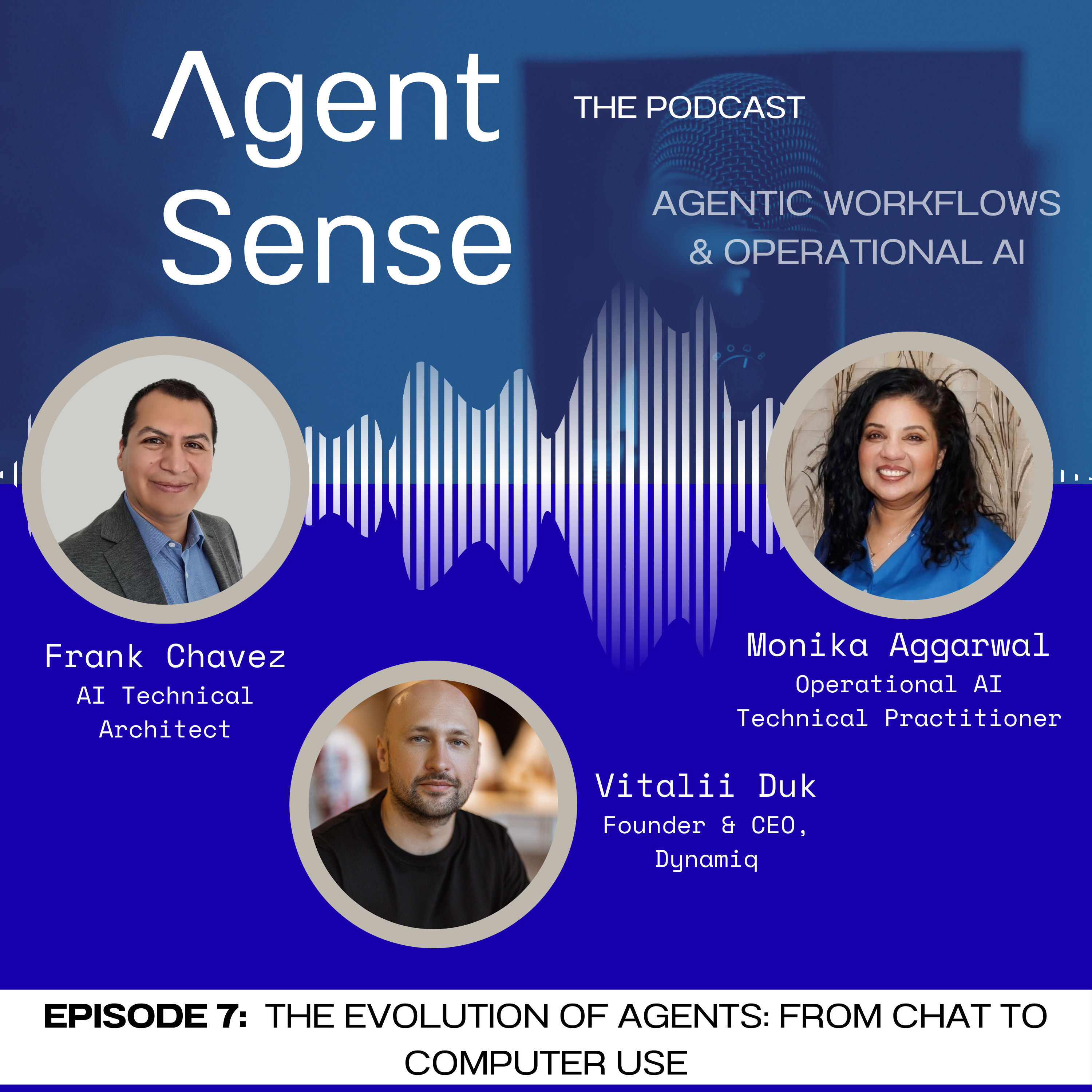
The episode is about hashtag#9minutes long. In this episode, my co host Frank Chávez and I are joined by Vitalii Duk from Dynamiq to discuss how agents are moving from answering questions to doing work across tools, systems, and runtime environments.
“𝑪𝒉𝒂𝒕 𝒎𝒆𝒂𝒏𝒔 𝒂𝒏 𝒂𝒈𝒆𝒏𝒕 𝒄𝒂𝒏 𝒂𝒏𝒔𝒘𝒆𝒓 𝒚𝒐𝒖𝒓 𝒒𝒖𝒆𝒔𝒕𝒊𝒐𝒏. 𝑪𝒐𝒎𝒑𝒖𝒕𝒆𝒓 𝒖𝒔𝒆 𝒎𝒆𝒂𝒏𝒔 𝒕𝒉𝒆 𝒂𝒈𝒆𝒏𝒕 𝒄𝒂𝒏 𝒕𝒂𝒌𝒆 𝒂𝒄𝒕𝒊𝒐𝒏 𝒂𝒄𝒓𝒐𝒔𝒔 𝒂𝒑𝒑𝒍𝒊𝒄𝒂𝒕𝒊𝒐𝒏𝒔, 𝒕𝒐𝒐𝒍𝒔, 𝒂𝒏𝒅 𝒘𝒐𝒓𝒌𝒇𝒍𝒐𝒘𝒔. 𝑻𝒉𝒂𝒕 𝒊𝒔 𝒘𝒉𝒆𝒓𝒆 𝒆𝒏𝒕𝒆𝒓𝒑𝒓𝒊𝒔𝒆 𝑨𝑰 𝒔𝒕𝒂𝒓𝒕𝒔 𝒕𝒐 𝒃𝒆𝒄𝒐𝒎𝒆 𝒐𝒑𝒆𝒓𝒂𝒕𝒊𝒐𝒏𝒂𝒍.”
We share a practical frame:
🔹 Start with bounded, observable, and measurable agent use cases
🔹 Define the agent’s authority boundary before giving it access to systems
🔹 Use orchestration to manage work across tools, agents, approvals, and exceptions
🔹 Add observability, audit, and human review before scaling agent action
🔹 Treat Day 2 and Day 3 readiness as part of the design, not an afterthought
𝙏𝙝𝙞𝙨 𝙞𝙨 𝙩𝙝𝙚 𝙚𝙣𝙩𝙚𝙧𝙥𝙧𝙞𝙨𝙚 𝙖𝙧𝙘𝙝𝙞𝙩𝙚𝙘𝙩𝙪𝙧𝙚 𝙨𝙝𝙞𝙛𝙩: 𝙖𝙜𝙚𝙣𝙩𝙨 𝙖𝙧𝙚 𝙢𝙤𝙫𝙞𝙣𝙜 𝙛𝙧𝙤𝙢 𝙧𝙚𝙨𝙥𝙤𝙣𝙨𝙚 𝙩𝙤 𝙚𝙭𝙚𝙘𝙪𝙩𝙞𝙤𝙣. 𝙏𝙝𝙚 𝙫𝙖𝙡𝙪𝙚 𝙞𝙨 𝙣𝙤𝙩 𝙤𝙣𝙡𝙮 𝙞𝙣 𝙬𝙝𝙖𝙩 𝙩𝙝𝙚 𝙖𝙜𝙚𝙣𝙩 𝙘𝙖𝙣 𝙙𝙤. 𝙄𝙩 𝙞𝙨 𝙞𝙣 𝙝𝙤𝙬 𝙨𝙖𝙛𝙚𝙡𝙮, 𝙤𝙗𝙨𝙚𝙧𝙫𝙖𝙗𝙡𝙮, 𝙖𝙣𝙙 𝙧𝙚𝙥𝙚𝙖𝙩𝙖𝙗𝙡𝙮 𝙞𝙩 𝙘𝙖𝙣 𝙤𝙥𝙚𝙧𝙖𝙩𝙚 𝙞𝙣 𝙧𝙚𝙖𝙡 𝙗𝙪𝙨𝙞𝙣𝙚𝙨𝙨 𝙬𝙤𝙧𝙠.
 LangPod